



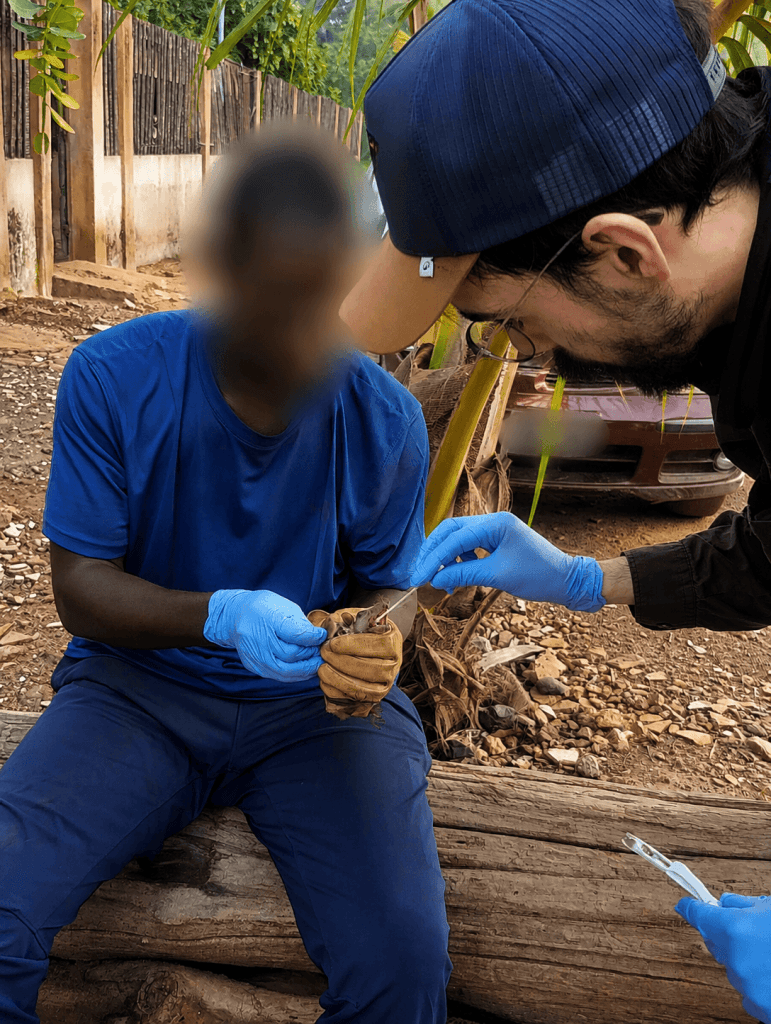
Many infectious diseases that affect humans originate in animals. Understanding where these pathogens circulate and how they can reach people is one of the major challenges of global health today. My PhD research focuses on this question by studying pathogens associated with bushmeat systems in West Africa.
Bushmeat, the meat of wild animals hunted for food, is an important source of nutrition and income for many rural communities. However, interactions between wildlife, domestic animals and humans can also create opportunities for disease transmission. Monitoring these interfaces is therefore essential for anticipating potential public health risks.
My research investigates the presence and diversity of pathogens in wildlife involved in bushmeat systems, with a particular focus on coronaviruses, such as Sars-CoV-like, and Bacillus anthracis, the bacteria responsible for anthrax. These pathogens are of special interest because of their ability to affect both animal and human health. In addition, the project explores a broader range of bacterial microorganisms that could represent previously overlooked or emerging health threats, called “Disease X”.
Using untargeted molecular tools, I screen biological samples collected from wildlife to detect pathogens and better understand their distribution within bushmeat networks. The project also incorporates social science approaches, including interviews with the actors involved in hunting, processing, and selling bushmeat, to identify practices at risk. The study is conducted around the Lama Classified Forest in southern Benin (West Africa), a biodiversity-rich region where interactions between wildlife, domestic animals, and people provide a valuable setting for investigating zoonotic risks.
This work follows a One Health approach, recognizing that the health of humans, animals, and ecosystems is closely connected. By combining biological and social data, the research aims to improve disease surveillance and provide a more comprehensive understanding of how zoonotic pathogens may circulate at the wildlife-human interface in the tropics.
Ultimately, the goal is to generate knowledge that can strengthen public health preparedness while also supporting sustainable management of wildlife resources.
Daniel PIRES, a UNITEID PhD student at the Center for Research on Biodiversity and the Environment (CRBE) in Toulouse, is writing his thesis under the supervision of Philippe GAUBERT and Émilie LECOMPTE.